For everyone
The lizards of Miami
Miami has, entirely by accident, become one of the best places in the world to watch ecology and evolution happen.
Over the past century, tropical lizards have arrived in south Florida from Cuba, Hispaniola, Puerto Rico, Jamaica, and Central America, carried in plant shipments and cargo. The result is a community of species that never encountered one another in their evolutionary histories, now living together in the same parks, gardens, and back yards, and sorting out their relationships in real time.
To an evolutionary biologist this is an experiment nobody could have been funded to run. We know roughly when each species arrived. We can watch what happens next. When two species meet for the first time, do they diverge? Do they change how they use the habitat, or what they look like? How quickly? Those are the questions the lab exists to answer, and Miami is where the answers are.
The one that was already here
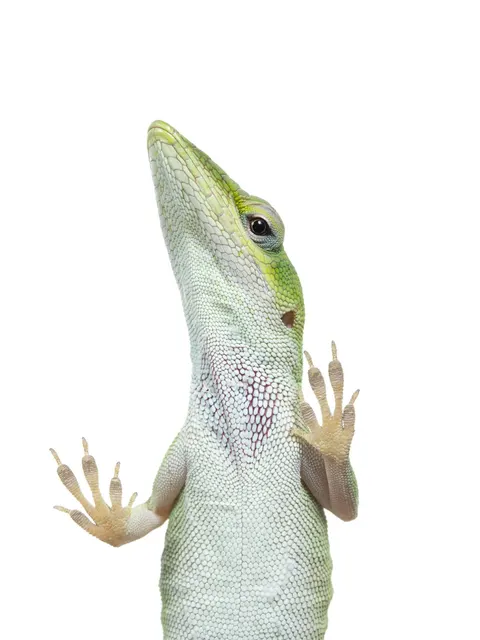
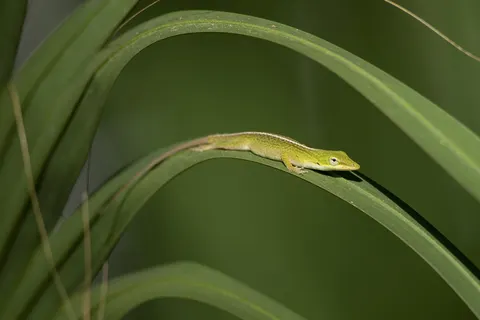
The green anole, Anolis carolinensis, is the only anole native to the southeastern United States. Its ancestors reached Florida from Cuba roughly 5 to 7 million years ago, and it now ranges as far north as Tennessee and North Carolina.
If you grew up in the southeast and remember green lizards on the porch that seem scarcer now, you are not imagining it, though the story is more interesting than simple displacement. Where brown anoles arrive, green anoles tend to move upward into the canopy rather than disappear.
Some species you are likely to meet
Native
Green anole
Anolis carolinensis. Green or brown depending on mood and temperature, with a pink dewlap. Usually higher up than you are looking.
From Cuba
Brown anole
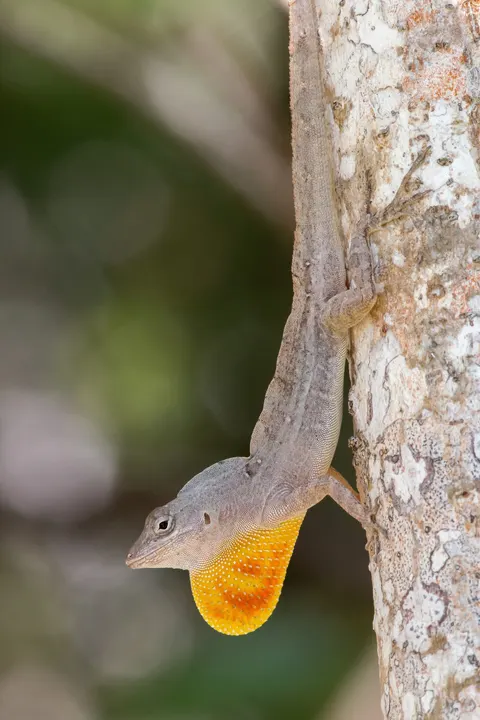
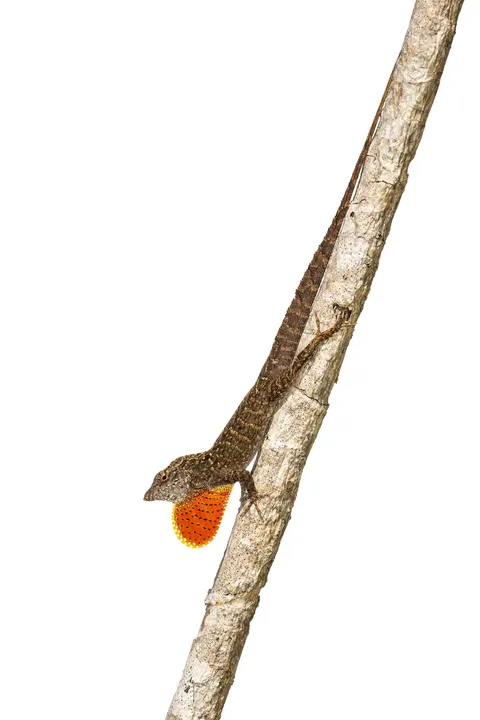
Anolis sagrei. The most abundant lizard in Miami by a wide margin. Brown, patterned, low on trunks and on the ground, with an orange and yellow dewlap.
From Puerto Rico
Crested anole
Anolis cristatellus. Slightly larger than a brown anole, with a raised tail crest in males. Where it arrives in Miami, it generally dominates brown anoles and causes them to perch lower to the ground and in hotter locations.
From Hispaniola
Bark anole
Anolis distichus. A small anole, these lizards are lightning quick and specialize in living on broad tree trunks. They predominantly eat only ants, and will 'squirrel' to the other side of a tree as soon as you see them!
From Cuba
Knight anole
Anolis equestris. The giant of the group, bright green and up to a foot and a half long. It generally lives high in tree canopies, eats a wide range of food items, including both fruit and other lizards, including smaller anoles!
Tap a name for a full species guide: how to identify it, where it came from, and what our research has found.
Take part
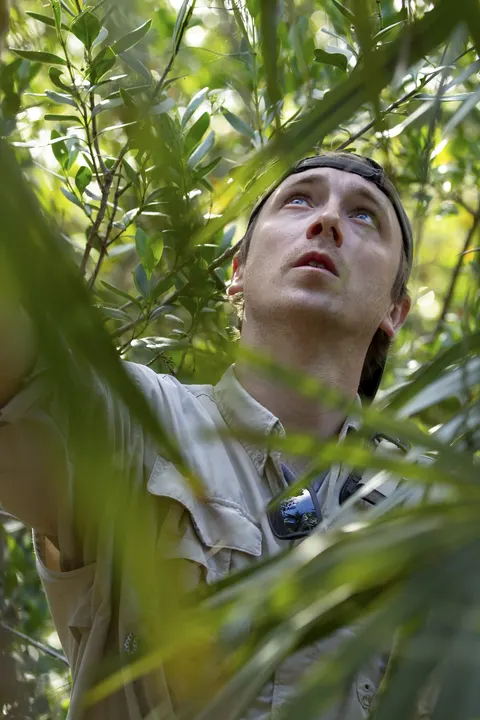
Every anole you photograph and upload is a data point. More than 10,000 verified records have already come from middle school students in the Lizards on the Loose program, and the community can always use more.
Photograph the lizard, upload it to iNaturalist, and let the community confirm the identification. Several of these species look near-identical to a beginner, which is exactly why we built LizardLens to help.