
Teaching & outreach
Making science accessible for all
Community science
Lizards on the Loose
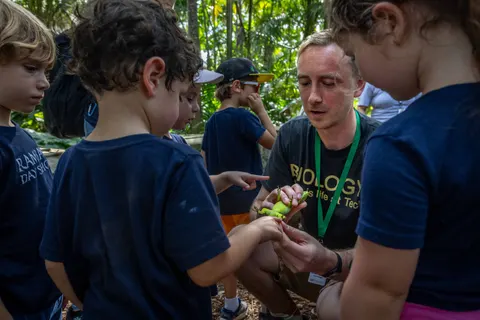
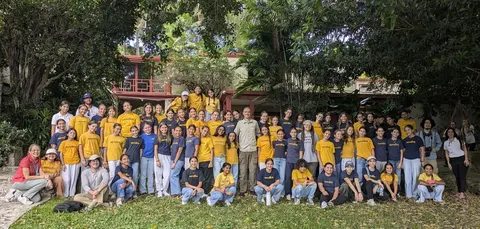
Lizards on the Loose is a community science program run through the Fairchild Challenge, the education arm of Fairchild Tropical Botanic Garden in Miami. James founded it and continues to lead it.
The Fairchild Challenge reaches more than 70,000 K-12 students a year across more than 250 south Florida schools, and more than 90% of those students are from groups underrepresented in science. Each year, upwards of 3,000 middle schoolers from 30 to 60 schools go out and record the lizards they find. The program has produced more than 10,000 verified species identification records on iNaturalist, which is to say the students are generating usable biodiversity data, not practising on a simulation of it.
Species identification is ordinarily the barrier that keeps non-experts out of this kind of work, and several of the Miami anoles look almost identical to a beginner. That is why we built LizardLens: students get a probability-ranked prediction instead of a guess, and correct the model by hand when it is wrong. The correction step is the education.
In the classroom
Courses at Georgia Tech
BIOS 2300, Introduction to Ecology. A large lecture course, covering all of the major topics in ecology (featuring lots of lizards).
BIOS 4460, Communicating Biological Research. A professional development workshop class for undergraduates, learning how to communicate their research to scientific audiences.
For younger readers
The Lizard Scientists
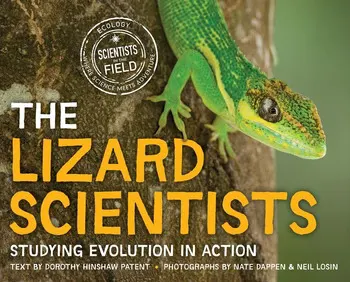
Lizards on the Loose features in The Lizard Scientists: Studying Evolution in Action (Clarion Books, 2022), written by Dorothy Hinshaw Patent with photographs by Nate Dappen and Neil Losin.
Ongoing
Events and workshops
The lab runs coordinated outreach each year: nocturnal biodiversity walks at Fairchild, introductions to R for high school students, career workshops, and teacher forums.
Working with schools and media
We are glad to hear from teachers, journalists, and anyone running a science program who thinks lizards might be useful to them. James has also served as a scientific advisor on stories for outlets including Science News Explores and Live Science.